Pages

Friday, November 21, 2014

Canada Goose in S.W. Florida

It had been several days since I visited the Bailey Tract, the weather is gray and it is misty, so I geared up and headed out.
Some of my first sightings were Blue Wing Teal.

And then.....I couldn't believe my eyes when I saw this Canada Goose...wow, what a surprise!

It seemed to be comfortable in our environment - happily feeding on some submerged vegetation.

I'm happy to see this and think to myself....this weather is perfect for those fowls and I'm blessed to be able to watch them.

The Hooded Merganser is still here - the Bailey Tract must agree with her.

More Blue-winged Teal - 2 males, 1 female

A Mottled Duck

More Blue-winged Teals.

I had to return and observe the Canada Goose some more, I watched it rest while reflecting on the last time that I saw a Canada Goose .... last winter with my good friends, Carol & John ....oddly enough, at the time, the Goose had been sighted in Marco Island.


A Coot and a Common Gallinule

Checking out this Common Gallinule along the roots of the Red Mangrove.

"Well, Hello there! Might you be lost?"

"Well, perhaps....but I kind of like it here."

It seemed to be right at home with the Commong Gallinules and Tricolored Heron.

On my way out of the Bailey Tract, Jim Boughton pointed out the Wilson Snipe hanging by the shoreline.

Unless it is singing and getting flushed from vegetation, this Wilson Snipe is easily camouflaged making it hard to notice.

Well, folks, it might have been rainy and gloomy but my heart was filled with sunshine - it was a great morning being surrounded by my feathered friends.

Wednesday, November 19, 2014

"Ding" - a Reddish Egret

Not too long ago I posted a photo of a Reddish Egret that was equipped with a transmitter and a band on my FB page, since this sharing took place I've learned a few things - and that, folks, is a good thing :)
I had not realized that the Reddish Egret happens to be the rarest wading bird in the U.S.The Florida population consist of 350-400 pairs with 100-125 of these pairs in the Florida Bays and Keys. Sadly, this sub-population appears to be declining. ARCI is involved in research and study of this specie (as well as many others), and their project have several partners and supporters, some of them are: Fish & Wildlife Services and San-Cap Audubon among others.
Let me introduce you to "Ding"
On 6/20/14 "Ding" was captured and released at Ding Darling. It was outfitted with a GPS solar powered transmitter, "Ding" has since ventured out several times to Tarpon Bay, the Lighthouse area of Sanibel, Pine Island and back to Ding Darling.

I personally saw/noticed "Ding" with its equipment first on 11/09/14 by the tower off the Wildlife Drive in Ding Darling Fish & Wildlife Refuge and again today 11/19/14, both times was during the morning while it was feeding. Here it is seen consuming a Ballyhoo.


The transmitter is quite visible in this photo.

Today it was seen shortly after capturing a shrimp.

"Ding" was quite active and, unlike me, didn't seem to mind the rain and low 50's temperature.


So, folks, if you happen to see "Ding", you too can be part of citizen science and report your findings/sightings at www.arcinst.org 
  You might also be interested in following their information by tuning in to www.arci-avianconservation.blogspot.com

Monday, November 17, 2014

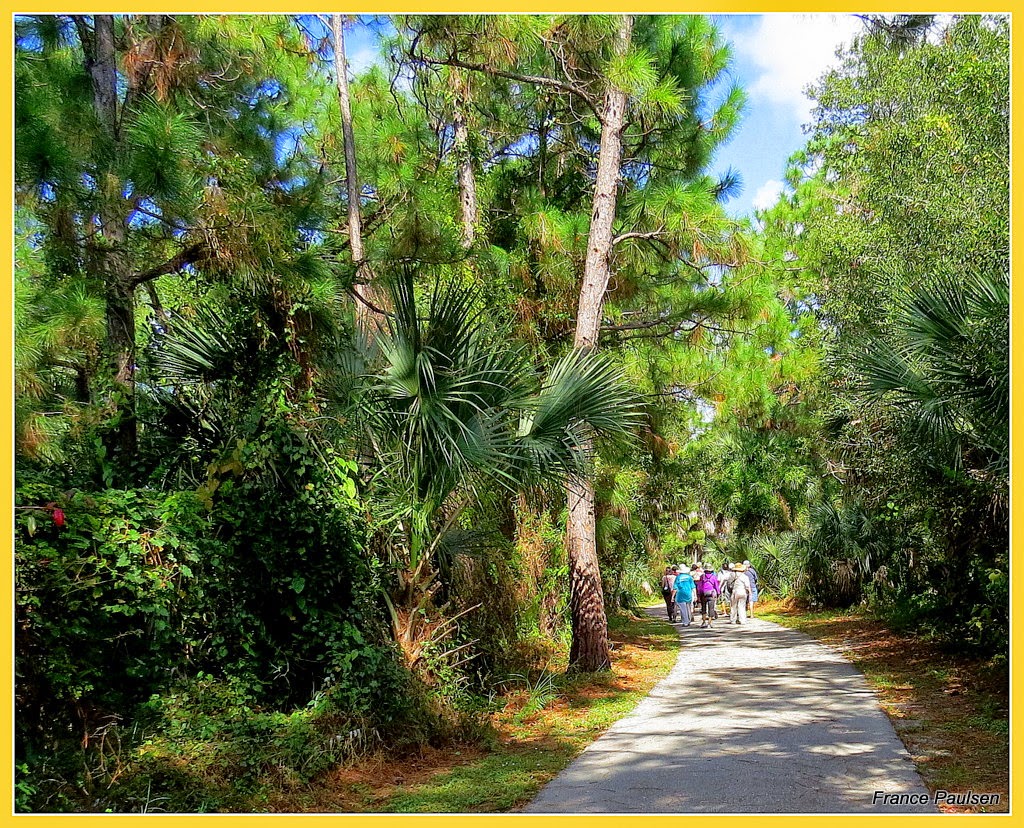
Eagles Lake Park & Sugden Regional Park with Caloosa Bird Club

I can't believe that it's been a whole week since I posted on my blog - time just flew by while I was away playing with my precious grandson. Well, I'm back and ready to share about my outing....so, come along.

Black-bellied Whistling Ducks were real close to the path and gave us good looks - at some point they flew and could be heard whistling.

The adult has the red bill while the juvenile sports a gray bill. These gorgeous ducks are often found perched on trees or shrubs. They are long-legged, broad-winged, and long-necked ducks.


We spotted the Belted Kingfisher and lucky for us, it stayed put for quite a while - giving us ample time to get a good view. In this specie the female is more colorful than the male with blue and rufous breast bands as opposed to the single bluish breast band for the male. It also has a shaggy crest.

The Belted Kingfisher is the most widespread and abundant kingfisher in North America. These birds need clear, still water for fishing, with elevated perches from which to hunt.

Always keep your eyes open and to the sky because you just never know what might appear.....such as Peregrine Falcon and

Short-tailed Hawk - white morph. Thankgoodness for the leaders of our groups who are able to identify these as I would be at a loss with identification as I am still on the learning stages as far as hawks and buteos are concerned.

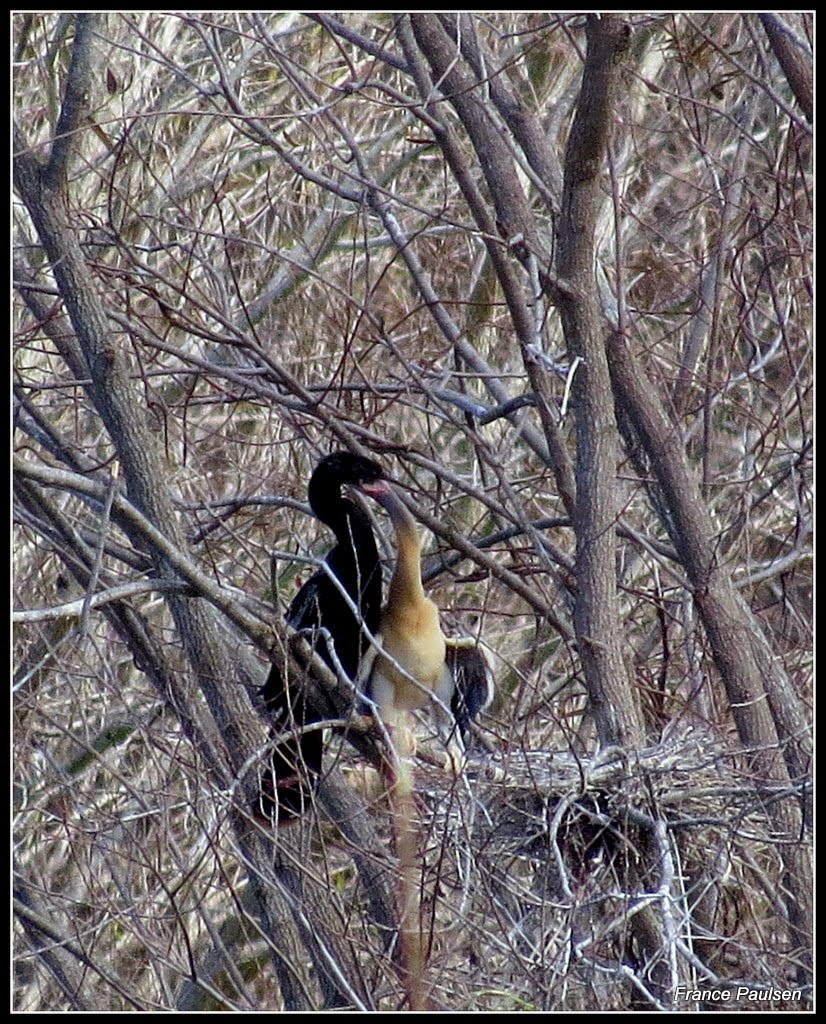
A male Anhinga feeding its chick and ....

the female nearby getting ready to go fish.

"Yes, the ladies can fish".

A Great Blue Heron chilling by the pond.

Ibis - a Glossy and a White - the white ones, I am told, are often called a Florida Chicken.


Mexican Sunflowers providing pollen for the bees.

Pretty Butterfly

One big family of White Ibis - the young ones are mostly dark brown, the immature gets more white with the brown and the adult are all white.

An American Coot - an adult with whitish bill with subterminal band and red eyes.

Heading back for lunch where we exchange our collective sightings and vote on the bird of the day - the Short-tailed Hawk won. After getting our belly full, my birding buddy Elaine and I headed to Bonita with the hopes of finding a Franklin Gull which has been sighted for the past few days.

We were provided with excellent direction and found the location with no problem - find the gull was another story.

We scanned the area several times and checked every gulls we saw, neither one of us had ever seen one before so it is possible that it eluded us.


The little peeps were there too - a Dunlin was taking a good bath.


A Ring-billed Gull - 1st winter

Sanderlings

We gave it a good try and decided to leave since the weather was turning and warnings of tornados had been heard.

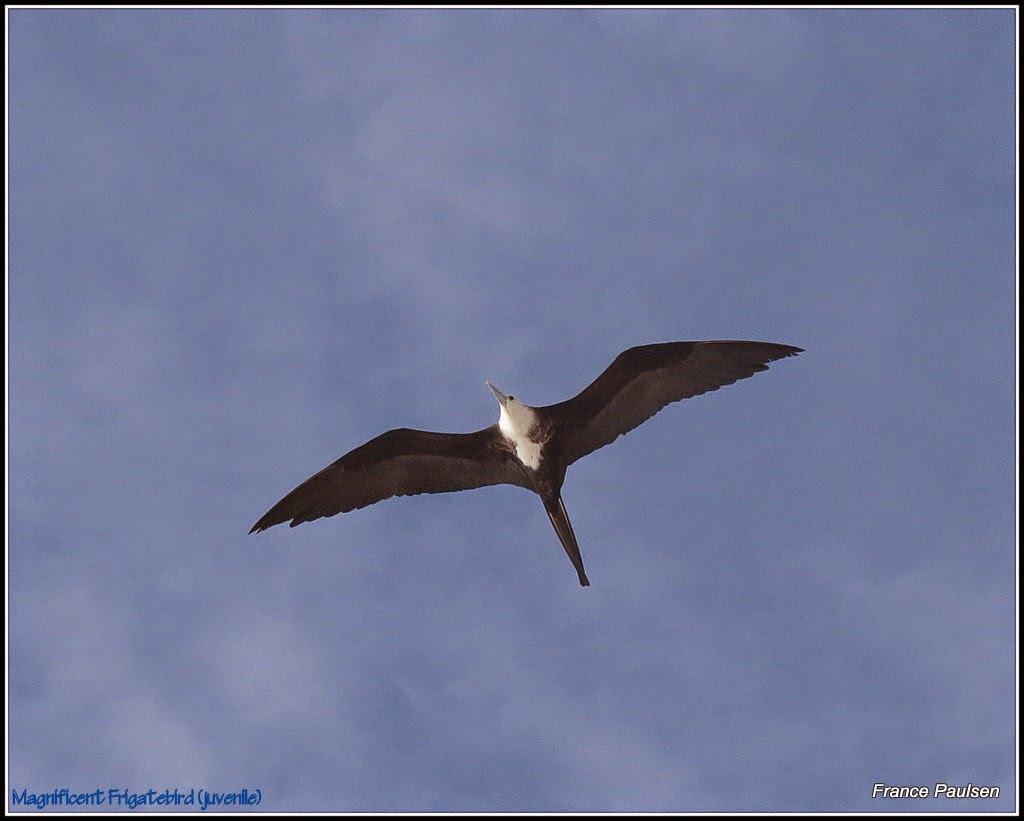
As we headed back to the vehicle, we spotted a pair of Magnificent Frigatebirds


A juvenile and an adult male Frigatebird - Magnificent!